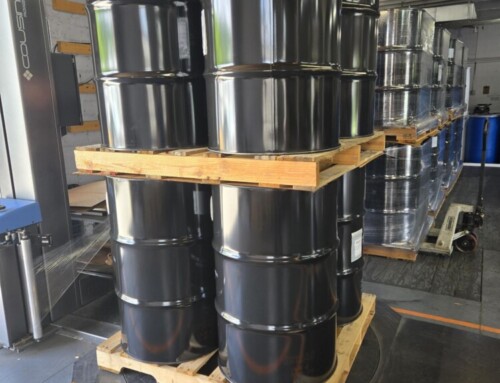


When you picture industrial storage or hazardous waste transport, chances are a metal barrel comes to mind. Rugged, cylindrical, and instantly recognizable, the steel drum (or barrel) is more than just a container—it’s a global symbol of durability and logistics. But where did it come from, and how much has it really changed? The history might surprise you.
🌍 A Humble Start: Roots in the Early 20th Century
The modern metal barrel as we know it was born out of necessity in the early 1900s—specifically during the rise of the American oil industry. While wooden barrels had been used for centuries (dating back to Roman times), they were leaky, flammable, and fragile. The growing demand for transporting petroleum safely and efficiently needed something better.
That “something better” came around 1905, when Nelson A. Rockefeller, connected to Standard Oil, began promoting the use of steel drums. While he didn’t invent them directly, his companies played a major role in standardizing and scaling their use. The actual invention is often credited to Henry Wehrhahn, an employee of Standard Oil, who patented an early version of the 55-gallon steel drum in 1905. His design featured rolled hoops for strength and a removable top, which became the basis of the modern drum.
🔧 Built to Last: The Classic 55-Gallon Drum
By the mid-20th century, the 55-gallon steel drum became the global standard for storing and shipping industrial liquids—oil, chemicals, and later, radioactive waste. It was strong, stackable, and could withstand rough handling.
Its basic specs—mild steel, 20-gauge or heavier, reinforced chimes, and a removable or sealed lid—remained surprisingly consistent. That’s part of the barrel’s brilliance: it was designed so well, it didn’t need major rethinking.
⚠️ Enter Regulations: Adapting to Hazards
As environmental and safety standards evolved, especially after the 1970s, the barrel had to adapt:
-
UN/DOT markings became required for shipping hazardous materials.
-
Linings and coatings were developed for chemical compatibility.
-
Overpack drums and salvage drums were introduced for contaminated or leaking originals.
-
Stainless steel and composite materials were developed for highly corrosive substances.
-
In the nuclear industry, steel drums became part of Type A containers under 49 CFR and 10 CFR regulations.
🚀 How Much Has It Changed?
Structurally, not much. The iconic form remains—a testament to its original smart design. But regulatory, material, and performance enhancements have brought the metal barrel into the modern age:
| Then (1905) | Now (2025) |
|---|---|
| Unlined mild steel | Epoxy-lined, stainless, or composite steel |
| No markings | Fully certified with UN/DOT/NRC codes |
| Used mainly for oil | Used across nuclear, chemical, food, pharma |
| Manual handling | Forklift-friendly, stack-tested |
| Fire-prone and leaky | Pressure-tested, sealed, overpack-ready |
💡 More Than a Container—An Industry Icon
From oil booms to nuclear cleanup, the metal barrel has stood the test of time. It’s a rare example of industrial design that’s both functional and iconic—instantly recognizable, endlessly adaptable, and still in heavy use over 100 years later.
At Volunteer Drum we carry forward this legacy by offering fully certified steel containers that meet today’s toughest standards—trusted by nuclear, chemical, and hazardous waste industries alike in sizes from 5 to 110 gallon.
Need one built for your exact spec? We have a special working relationship with the manufacturers, and years of working experience with our customers. We go the extra mile to ensure that every container meets your spec. 🛢️